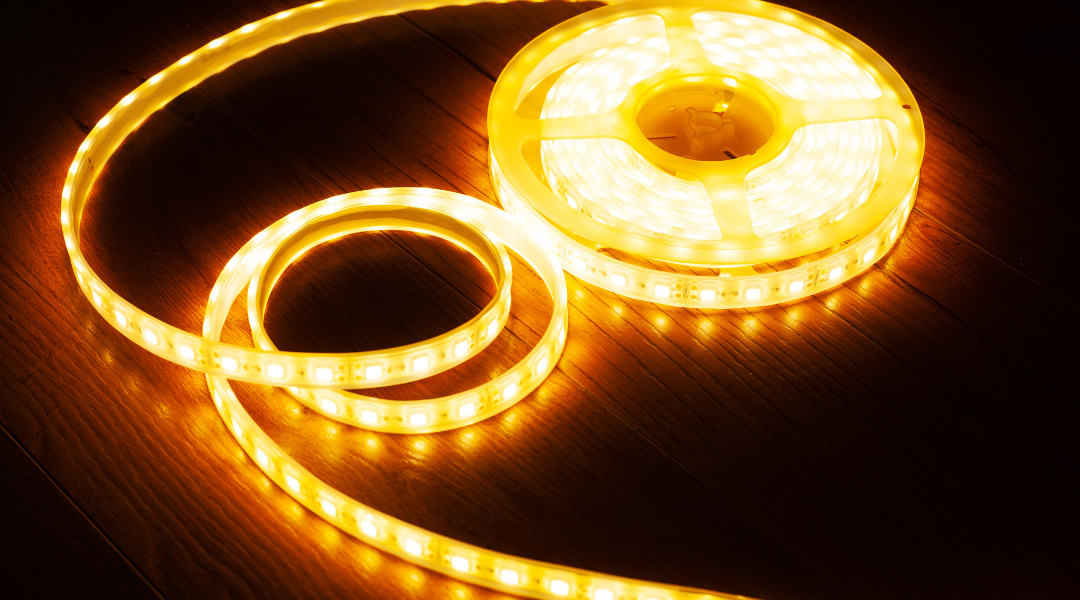
Switching to LED lighting is one of those decisions that pays off quickly and keeps paying off for years. The technology has matured to the point where there are no meaningful compromises compared to traditional light sources — only advantages in energy efficiency, lifespan and light quality. But the market has also grown dramatically, and navigating it without some basic knowledge leads to poor choices that undermine the entire point of upgrading.
Why the LED transition still matters
Energy consumption is the most obvious argument. A quality LED bulb typically uses 75–80% less electricity than an equivalent incandescent lamp and produces the same or better light output. For a home with many light points, this translates to a noticeable reduction in monthly electricity bills. For a business operating commercial premises, the savings scale proportionally with the size of the installation.
Lifespan is the second argument. While incandescent bulbs typically last 1,000–2,000 hours and fluorescent tubes around 8,000–15,000 hours, quality LED products are rated at 25,000–50,000 hours of operation. This dramatically reduces replacement frequency and the associated labour costs — a significant factor in commercial settings.
Heat output is the third and often underestimated factor. Incandescent bulbs convert only about 10% of their energy into light; the rest becomes heat. LED sources are far more efficient and generate significantly less heat, which affects both comfort in the space and the load on air conditioning systems in commercial buildings.
Tools and accessories for LED installation: https://leduastore.com/for-installation-tools/
Understanding the key specifications
Shopping for LED lighting without understanding a few core metrics leads to mismatched products and disappointment. These are the ones that actually matter.
Lumens, not watts. Lumens measure actual light output; watts measure energy consumption. When replacing a 60W incandescent bulb, you need approximately 800 lumens from your LED replacement, which will likely draw only 8–10 watts.
Colour temperature, measured in Kelvin. This determines whether the light appears warm, neutral or cool. Values around 2700–3000K produce warm white light similar to traditional incandescent bulbs — comfortable for living rooms and bedrooms. Neutral white at 3500–4000K suits kitchens, bathrooms and office environments. Cool white above 5000K is preferred for workshops, retail displays and tasks requiring high visual acuity.
Colour Rendering Index (CRI). This value, expressed as a number from 0 to 100, indicates how accurately the light source renders colours compared to natural daylight. For residential use, CRI 80+ is generally acceptable. For retail environments, galleries, restaurants or any space where colour accuracy matters, CRI 90 or above is worth specifying.
A common mistake when upgrading an existing installation is choosing LED replacements based only on the base type and wattage. Two products that appear identical on the packaging can produce very different results in terms of light distribution, colour quality and longevity. Always check lumens, CRI and colour temperature before purchasing.
Home lighting: room by room considerations
Different areas of a home have genuinely different lighting requirements, and a single lamp type rarely serves all of them equally well.
Living rooms benefit from layered lighting — a combination of ambient ceiling fixtures, accent lighting for features like artwork or shelving, and task lighting near reading chairs or work areas. Dimmable LED options give flexibility to adjust the mood without switching between different light sources.
Kitchens require good task lighting over work surfaces, ideally directional rather than diffused. Under-cabinet LED strips are one of the most cost-effective upgrades available — they significantly improve visibility for food preparation and are easy to install.
Bathrooms need lighting that renders skin tones accurately without creating harsh shadows. CRI 90+ sources positioned at face level, rather than only overhead, dramatically improve the quality of the light for everyday grooming tasks.
Bedrooms benefit from warm colour temperatures and dimming capability. Smart LED bulbs that can be adjusted through a phone app or voice assistant add convenience and allow the light to shift warmer in the evening, which supports natural sleep patterns.
Commercial and business applications
| Application | Recommended colour temperature | Key considerations |
|---|---|---|
| Office workspaces | 3500–4000K | Uniform illumination, glare control, dimming for screens |
| Retail | 3000–4000K | High CRI (90+), directional accent lighting for products |
| Restaurants | 2700–3000K | Warm, atmospheric, dimmable for different service periods |
| Warehouses & workshops | 5000–6500K | High lumen output, durability, wide beam angle |
| Outdoor & security | 4000–5000K | IP65 minimum rating, motion sensor compatibility |
Smart lighting and controls
The integration of LED technology with smart home and building management systems has expanded considerably. Motion sensors, occupancy detectors and daylight harvesting controls can reduce energy consumption by an additional 30–50% beyond what LED efficiency alone achieves — a compelling argument for any commercial installation.
For homes, smart LED bulbs and strips that connect via Wi-Fi or Zigbee protocols allow control from a smartphone, integration with voice assistants and scheduling that automates lighting based on time of day or occupancy patterns.
Installation quality and long-term performance
The longevity of an LED installation depends heavily on installation quality. Overloaded circuits, poorly made connections and inadequate heat dissipation in enclosed fixtures are the most common causes of premature LED failure. When upgrading an existing installation, always check that the fixture type is compatible with LED sources — some enclosed fittings trap heat in ways that shorten LED lifespan significantly.
A complete range of LED products for residential and commercial use: https://leduastore.com/
The performance gap between quality and budget LED products is real. Driver quality — the internal component that regulates power delivery to the LED chip — determines both light stability and longevity. Products with poor drivers produce light that flickers imperceptibly but causes eye fatigue over time, and they fail far sooner than their rated hours suggest. Specifying products with clear warranty terms and measurable quality indicators is always worth the modest additional cost.